

In a world where learning can feel like trying to solve a Rubik’s cube blindfolded, assistive learning tools swoop in like superheroes. These innovative resources make education accessible and enjoyable for everyone, turning challenges into triumphs. Whether it’s a quirky app that reads aloud or software that transforms text to speech, these tools are here to save the day—no cape required.
Imagine tackling math problems with a friendly digital tutor or writing essays with a virtual sidekick that offers suggestions. With assistive learning tools, students unlock their potential while having a little fun along the way. It’s not just about keeping up; it’s about thriving in a world filled with endless possibilities. So, let’s dive into the fascinating realm of assistive learning tools and discover how they can transform the educational experience for learners of all ages.
Overview of Assistive Learning Tools
Assistive learning tools play a crucial role in making education more accessible. They support students in overcoming barriers and enhance their learning experiences.
Definition and Purpose
Assistive learning tools refer to technology and resources designed to aid individuals with learning difficulties. These tools help in processing information more effectively. Their main purpose involves improving comprehension and retention of knowledge. For instance, text-to-speech software allows students to hear written content aloud, which aids those who struggle with reading. Another example includes screen magnification tools, which assist visually impaired learners by enlarging text and images. By focusing on individual needs, these tools enable learners to reach their full potential.
Types of Assistive Learning Tools
Various categories of assistive learning tools address different learning challenges. Software applications constitute one primary type, including programs that facilitate note-taking or organization. Hardware tools, such as voice recognition devices, allow users to input data orally instead of typing. Educational apps form another significant category, providing interactive ways to engage students through games and quizzes. Additionally, adaptive materials, such as Braille books and audio resources, cater to diverse learning preferences. Each type of tool contributes uniquely to enhancing educational experiences for learners of all ages.
Benefits of Assistive Learning Tools
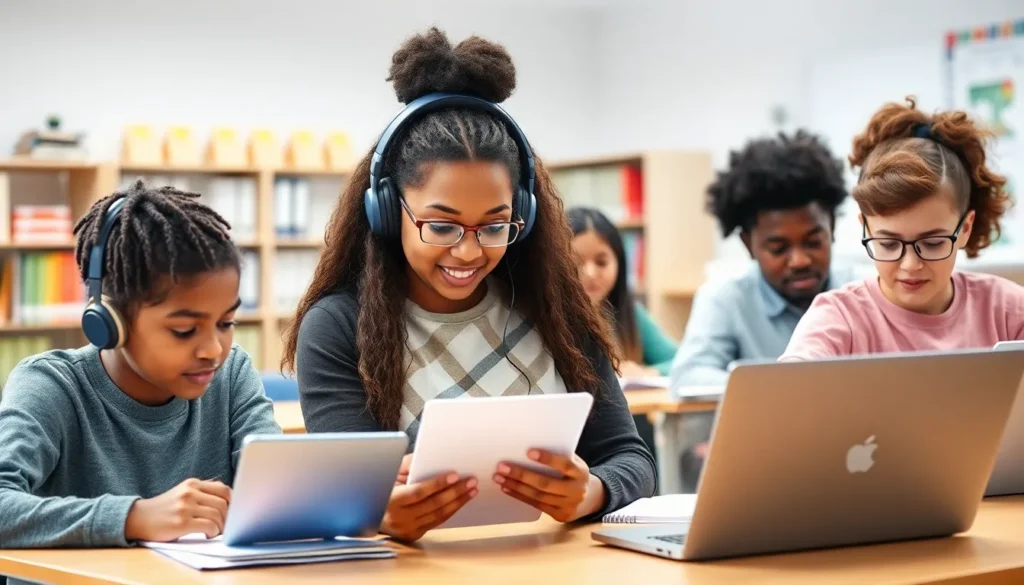
Assistive learning tools offer significant advantages for diverse learners. These benefits include enhanced learning outcomes and increased accessibility.
Enhanced Learning Outcomes
Enhanced comprehension marks a primary benefit of assistive learning tools. These resources cater to various learning styles, allowing students to grasp complex concepts easily. Improved retention of knowledge typically follows, as students engage with material interactively. Many tools support personalized learning experiences, which help educators tailor instruction to individual needs. Studies show that students who use assistive learning technologies demonstrate better academic performance. Such tools not only engage users but also instill confidence, motivating them to participate actively in their education.
Increased Accessibility
Accessibility improves notably with the integration of assistive learning tools. These resources empower students with learning difficulties to navigate educational settings confidently. Many tools include features like text-to-speech and note-taking applications, which break down barriers to understanding. Students can access materials in formats that suit them better, enabling equal opportunity for success. Furthermore, assistive tools can adapt content to various skill levels, promoting inclusivity in diverse classrooms. Such advancements ensure that all learners receive the support they need to thrive academically.
Popular Assistive Learning Tools
Assistive learning tools encompass various software solutions and hardware devices designed to support learning. These resources significantly facilitate the educational journey for students with diverse needs.
Software Solutions
Numerous software applications exist to enhance learning experiences. Text-to-speech programs convert written content into spoken words, aiding comprehension for auditory learners. Note-taking apps provide students with organized ways to capture and retain information. In addition, interactive educational platforms engage users through gamified learning, making difficult concepts more digestible. Visual aids and customizable interfaces further accommodate unique learning styles, ensuring that every student can thrive academically. Overall, these software solutions create inclusive environments that promote effective learning.
Hardware Devices
Various hardware devices play a crucial role in assistive learning. Voice recognition technology enables students to interact with computers through speech, streamlining the process of writing and researching. Adaptive keyboards and alternative input devices allow users with mobility challenges to access educational content comfortably. Braille displays provide visually impaired learners with tactile feedback, ensuring they can engage with materials fully. Combining these devices fosters an inclusive educational experience, empowering learners with different needs to participate actively. Each hardware solution contributes uniquely to supporting students on their academic journey.
Challenges in Implementing Assistive Learning Tools
Implementing assistive learning tools includes various challenges that hinder effective integration in educational settings.
Accessibility Barriers
Accessibility barriers often impede the effectiveness of assistive learning tools. Not all tools are designed with every learner’s needs in mind. Some students face difficulties related to the technology’s compatibility with existing systems. Additionally, lacking adequate training for educators can limit the tools’ effectiveness. Many teachers need support to implement these resources successfully. Moreover, institutions may not evaluate all students’ individual needs properly, causing mismatches between tools and users. Accessibility also extends to physical environments, where infrastructure may not accommodate specific technologies or devices.
Cost Considerations
Cost considerations present another significant obstacle when adopting assistive learning tools. Budget constraints frequently limit schools’ ability to invest in essential technologies. Many advanced tools or software programs are priced beyond typical educational budgets. Additionally, ongoing costs for subscriptions and maintenance further strain financial resources. When seeking funding, districts often prioritize general education over specialized tools, leaving assistive technologies underfunded. Furthermore, significant disparities exist between public and private institutions regarding access to resources, exacerbating inequities in educational opportunities.
Assistive learning tools are revolutionizing education by making it more inclusive and engaging for all students. They empower learners to overcome obstacles and embrace their unique strengths. By providing tailored support, these tools foster an environment where every student can thrive academically and personally.
The journey towards fully integrating assistive technologies into educational settings is ongoing. While challenges like accessibility and budget constraints remain, the potential benefits far outweigh the hurdles. As educators and institutions continue to adapt and innovate, the future of learning looks brighter for those who benefit from these invaluable resources. Embracing assistive learning tools is not just a step forward; it’s a leap towards a more equitable educational landscape.