
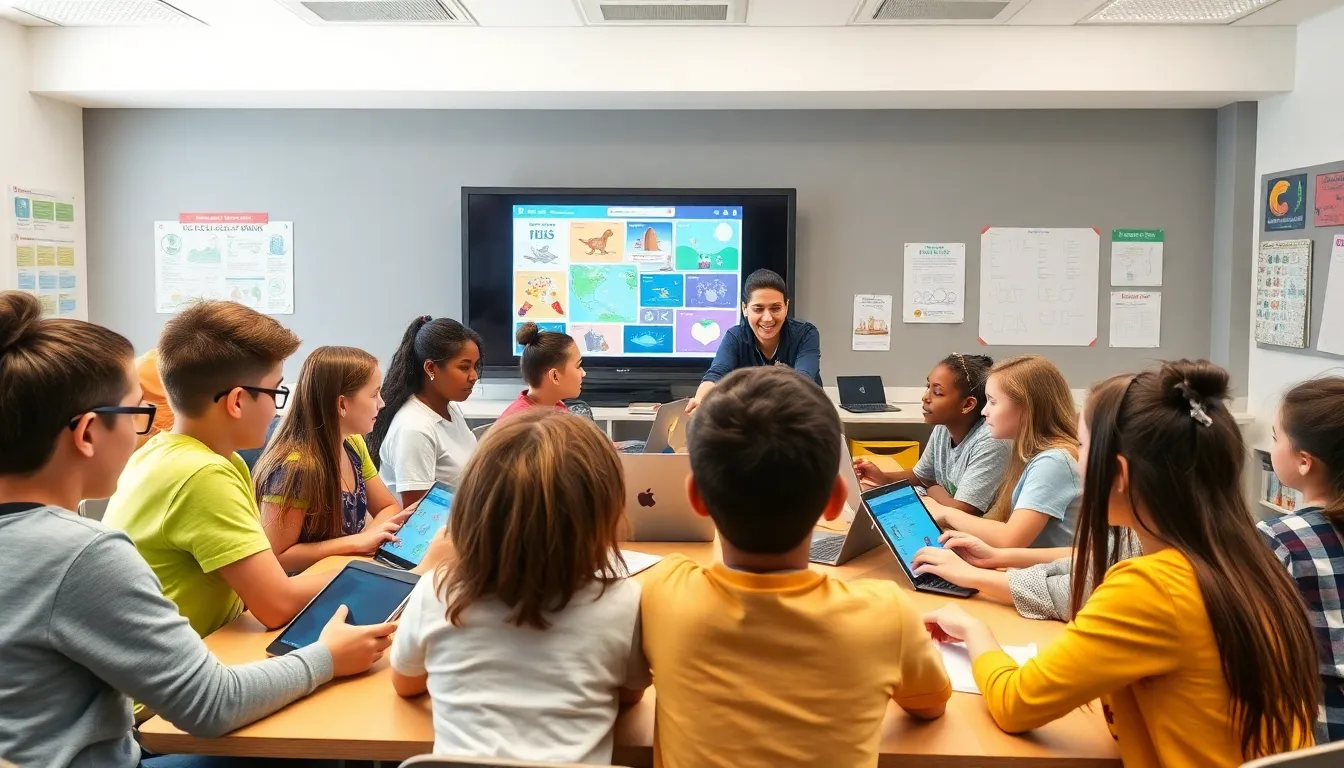
In a world where textbooks are getting a little dusty and chalkboards are practically relics, educational technology has swooped in like a superhero, cape and all. It’s transforming classrooms into vibrant hubs of creativity and engagement, where learning is as exciting as a rollercoaster ride—minus the nausea. From interactive apps to virtual reality experiences, it’s clear that the future of education is not just bright; it’s downright dazzling.
Table of Contents
ToggleWhat Is Educational Technology?
Educational technology refers to the integrated use of technology to enhance teaching and learning processes. It encompasses a diverse range of tools, resources, and strategies to support and improve educational outcomes. Digital platforms, software applications, and multimedia resources play crucial roles in this field.
Interactive applications engage students in learning experiences, making content more relatable. Virtual reality immerses users in simulated environments that enhance comprehension and retention. Learning management systems allow educators to streamline course management and foster collaboration among students.
Data analytics provides insights into student performance, enabling tailored instruction. By utilizing educational technology, teachers can monitor progress through real-time feedback and adaptive learning paths. Such advances promote personalized experiences to address individual needs and learning styles.
Distance learning technologies facilitate access to education for diverse populations. Online courses and webinars provide opportunities for continued learning outside traditional classrooms. In this context, education becomes more accessible for those in remote areas or with demanding schedules.
Collaboration tools encourage teamwork and communication among students. Video conferencing tools enable group projects and discussions, enriching the learning experience. Continuous innovation in educational technology paves the way for more engaging learning environments.
Ultimately, educational technology embodies the evolving landscape of modern education. Tools designed for interactive and immersive experiences prepare students for the challenges of the digital world. As the integration of technology in education continues to expand, its impact on learner engagement and success remains significant.
The Importance of Educational Technology
Educational technology plays a crucial role in transforming classroom experiences. It creates engaging and interactive learning environments that captivate students.
Enhancing Learning Experiences
Interactive applications mesmerize learners with dynamic content that fosters curiosity. Immersive technologies such as virtual reality transport students into real-world scenarios, enhancing understanding. Utilizing multimedia resources facilitates different levels of engagement, as students can absorb knowledge through varied formats. Teachers leverage learning management systems to streamline course content, track student progress, and enhance communication. Such tools make learning more interactive, capturing attention and improving retention.
Supporting Diverse Learning Needs
Educational technology accommodates learners with different abilities, making education more inclusive. Assistive technologies, like speech-to-text software, empower students with disabilities to participate fully. Personalized learning platforms adjust to individual student needs, catering to varied learning paces and styles. Educational resources in multiple languages promote accessibility for non-native speakers, supporting language acquisition. Collaboration tools enhance peer-to-peer interaction, encouraging teamwork regardless of students’ backgrounds. Overall, these advancements ensure that every student receives the attention and support necessary for success.
Current Trends in Educational Technology
Educational technology continues to evolve rapidly, influencing how instruction occurs and enhancing student engagement. Current trends illustrate advancements that reshape the learning landscape.
E-Learning Platforms
E-learning platforms dominate the educational landscape, offering accessible and flexible learning opportunities. Platforms like Canvas and Blackboard facilitate course management, streamline communication, and enhance student interaction. Many institutions utilize these tools to create blended learning environments, combining online and in-person instruction. User-friendly interfaces enable learners to navigate content efficiently, while mobile compatibility supports learning on-the-go. Analytics tools integrated into these platforms help educators track student progress and identify areas for improvement.
Virtual and Augmented Reality
Virtual and augmented reality technologies provide immersive learning experiences, transforming traditional educational methods. Students can explore historical sites or conduct science experiments in virtual environments, fostering deeper understanding. Augmented reality apps, such as Google Expeditions, enable learners to visualize complex concepts through interactive 3D models. These technologies capture attention and improve retention rates, proving beneficial for various subjects. By integrating VR and AR in classrooms, educators support experiential learning, ultimately preparing students for real-world applications.
Challenges in Implementing Educational Technology
Implementing educational technology presents multiple challenges that hinder its effectiveness. Educational institutions often encounter issues like accessibility and the need for comprehensive teacher training.
Accessibility Issues
Accessibility issues can limit the impact of educational technology on diverse student populations. Not every student has equal access to devices or high-speed internet, especially in remote areas. This disparity in resources creates barriers that prevent effective engagement with digital learning tools. Schools often find it crucial to address these gaps to promote inclusivity. Assistive technologies, when integrated into classrooms, offer support for students with disabilities. Moreover, resources available in multiple languages enhance learning opportunities for non-native speakers. Effective solutions must prioritize equitable access to ensure all students benefit from educational technology.
Teacher Training and Support
Teacher training and support play a vital role in the successful integration of educational technology. Many educators lack sufficient training in using digital tools for instruction. Consequently, this gap in knowledge can lead to ineffective teaching methods. Professional development programs must focus on practical applications and hands-on experience with technology. Collaboration among staff encourages sharing best practices and strategies. Continuous support from IT personnel helps alleviate technical difficulties and fosters confidence in using new tools. When educators feel well-equipped and supported, they can leverage educational technology to enhance student learning effectively.
Future of Educational Technology
Innovations in educational technology will shape how learning occurs over the coming years. Exciting advancements are on the way as new tools and methods emerge.
Innovations on the Horizon
Advanced artificial intelligence offers personalized learning experiences, tailoring content to individual needs. Adaptive learning platforms continuously analyze student performance, facilitating real-time adjustments in teaching strategies. Moreover, blockchain technology promises secure credentialing and enhanced transparency in educational records. The integration of AI-powered tutoring systems supports students outside traditional classroom hours. Emerging tools like gamified learning apps further engage students, transforming education into an interactive adventure. Virtual and augmented reality advancements will likely provide even more immersive experiences, enhancing understanding through realistic simulations and scenarios.
Predictions for Classroom Integration
Classrooms will increasingly adopt hybrid learning environments, mixing online and face-to-face interactions. Social media platforms may enhance communication between students and teachers, creating dynamic learning communities. The rise of mobile learning will enable students to access educational content anytime, anywhere, promoting continuous engagement. Additionally, schools will prioritize digital literacy, equipping students with essential skills for a technology-driven world. As educational institutions fully embrace these innovations, they’ll foster environments that nurture collaboration and critical thinking. Increased focus on data analytics will empower educators to make informed decisions, ultimately enhancing student success and retention rates.
The evolution of educational technology is reshaping how students learn and interact with information. Its ability to create engaging and inclusive environments offers opportunities for all learners to thrive. By embracing innovative tools and methodologies, educators can foster deeper understanding and retention of knowledge.
As technology continues to advance, the potential for personalized and adaptive learning experiences grows. The integration of these technologies not only enhances student engagement but also prepares them for future challenges in a digital world. With ongoing support and professional development for educators, the journey toward a more effective and inclusive educational landscape is well underway.